
Changi Airport Satellite Gate: Redefining Remote Operations
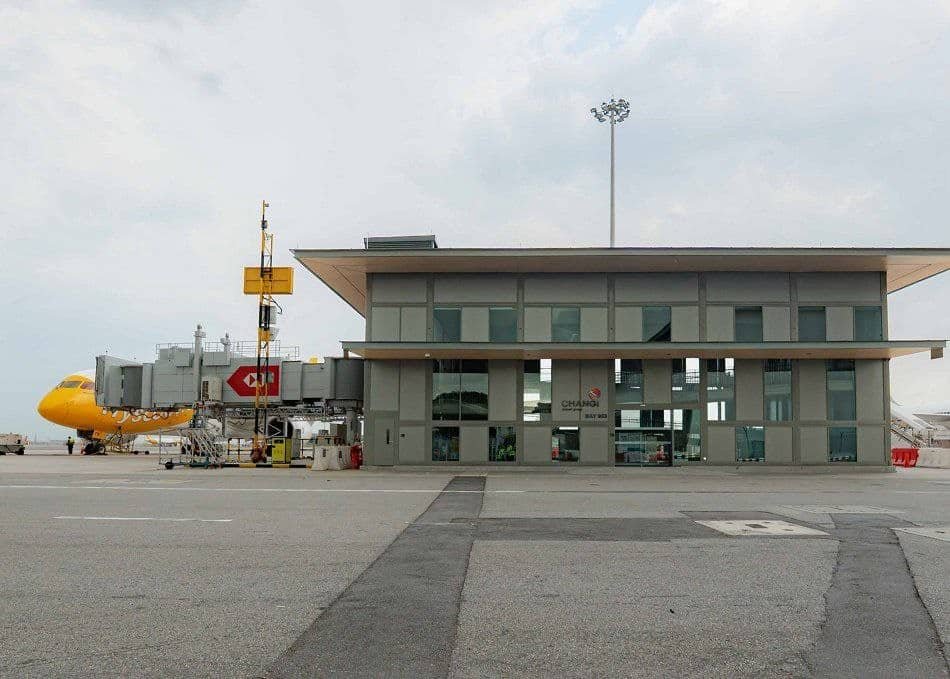
Changi Airport satellite gate—a groundbreaking infrastructure update engineered to deliver all-weather aerobridge comfort directly to remote aircraft parking stands.
While the vast majority of passenger flights at Changi connect directly to main terminal gates, remote stands remain essential for maximizing apron capacity during high-demand peak hours. The new satellite gate bridges the gap between bus transfers and premium terminal convenience, ensuring travelers enjoy a fully sheltered, climate-controlled journey from airport shuttle to aircraft door.
The satellite gate plays a vital operational role at Changi Airport by extending premium terminal comfort to remote aircraft parking stands. While 98% of flights connect directly to terminal gates, remote stands remain essential for absorbing high-density traffic during peak hours. By introducing all-weather, climate-controlled aerobridges to these remote stands, Changi ensures that passenger comfort and accessibility are maintained even when main terminal gates are fully utilized ahead of Terminal 5’s opening in the mid-2030s.
Beyond enhancing the traveler experience, the facility significantly boosts airfield efficiency and working conditions. Its zero-energy, solar-powered infrastructure allows Changi to scale ground capacity without increasing grid demand, while smart HVAC automation minimizes energy waste. Simultaneously, it transforms ground handling operations by providing over 500 airport personnel—including cabin cleaning teams, ground handlers, and security staff—with a sheltered, air-conditioned environment, dramatically improving safety and comfort during remote flight turnarounds.
Step-by-Step Passenger Journey
- Airside Shuttle Transfer: Dedicated shuttle buses transport travelers from the main terminal concourse directly to the satellite gate entrance.
- All-Weather Arrival: Buses pull beneath a protective entrance canopy, allowing passengers to step into a fully air-conditioned building completely shielded from rain, wind, and heat.
- Barrier-Free Ramp Navigation: A gently sloping 60-meter incline connects the bus bay level to the upper boarding lounge, specifically designed for easy use by wheelchair users, seniors, families with strollers, and travelers with rolling carry-on bags.
- Direct Aerobridge Boarding: Passengers walk through two upper-level aerobridges directly into the aircraft cabin, completely bypassing outdoor tarmac staircases.
Design & Airport Integration
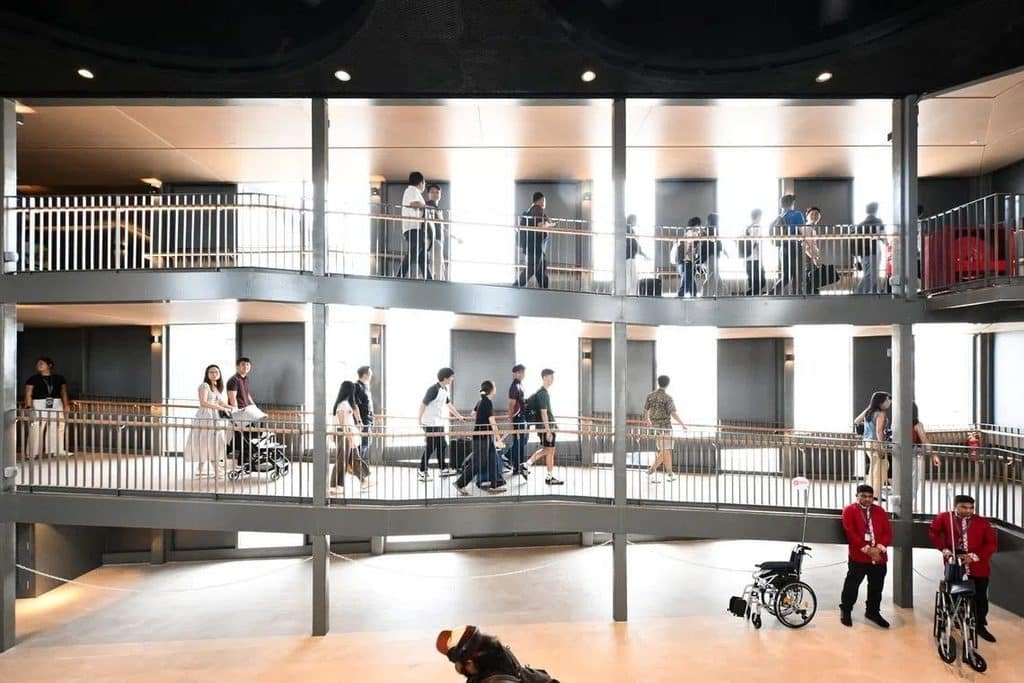
- Compact Footprint: 200 m² layout (tennis court size) designed for high efficiency in restricted airfield spaces.
- Two-Level Structural Flow: Sheltered lower-level bus bay connected to an upper boarding concourse to prevent crowding.
- Universal Accessibility: 60-meter barrier-free ramp connects both levels for wheelchairs, strollers, and luggage.
- Dual Aerobridges: Upper-level aerobridges link directly to aircraft doors, eliminating outdoor tarmac stairs.
- Aircraft Versatility: Accommodates both narrow-body and wide-body remote aircraft operations.
- Zero-Energy Powered: 100% powered by rooftop solar panels connected to off-grid battery storage.
- Smart Airfield Integration: Flight-synced HVAC pre-cools automatically and transmits wireless diagnostic alerts to main terminal teams.
Changi Airport’s first satellite gate sets a new benchmark for remote airfield infrastructure by blending passenger comfort, zero-energy design, and operational efficiency. By bringing all-weather aerobridges to remote stands, Changi protects traveler convenience and staff welfare during peak traffic hours without increasing main grid energy loads.